In Woodbridge, homes near the Occoquan River and Belmont Bay see plenty of damp, foggy mornings, and so do their sidewalks. That dampness is exactly what turns concrete green.
Green algae on concrete grows wherever a walkway stays shaded and wet: under trees, on the north side of the house and next to downspouts. Besides looking bad, it gets slippery when wet. Cleaning it with a surface cleaner and a post-treatment removes it and slows the regrowth.
Here is why it happens, why it is a safety issue and how to keep it off. Our driveway and concrete cleaning service handles sidewalks, walkways and patios.
Why Concrete Turns Green
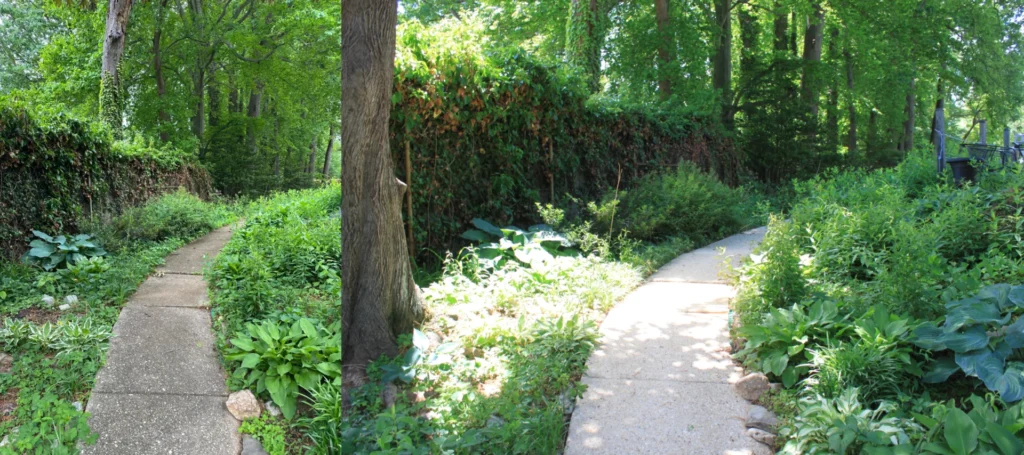
Concrete is porous. It soaks up water and holds it, and the rough surface gives algae spores a place to settle. Add shade, leaves and pollen, and you have a perfect growing surface. Walkways near downspouts or sprinklers are usually the worst.
Why It’s a Safety Issue
Algae turns slick in the rain. Front walks, steps and pool areas are where most slips happen, and they are exactly the shaded, damp spots where algae grows. Clean concrete grips much better underfoot, which matters most for kids and older family members.
Other Stains on Concrete
- Black mildew spots in shaded corners.
- Brown leaf stains (tannins) from fall.
- Red clay splash near beds and downspouts.
- Rust marks from furniture or fertilizer.
- Oil drips and tire marks on driveways.
How to Clean It for Good
- Sweep off loose debris.
- Clean with a rotating surface cleaner for an even, streak-free finish.
- Detail edges and steps by hand.
- Apply a post-treatment to kill remaining growth and slow the return.
A wand alone often leaves stripes and misses the roots. For the full picture on driveways and patios, see our driveway cleaning guide.
Should You Seal Concrete After Cleaning?
Sealing is optional. A good penetrating sealer helps concrete shed water, which slows algae and makes stains easier to clean. It needs a clean, dry surface to bond, so cleaning always comes first. Many homeowners skip it on walkways and just keep up with regular cleaning instead.
Cleaning Green Algae on Concrete Yourself
For a small, flat section, a stiff brush and a concrete cleaner can work. If you use a rental pressure washer, keep a wide tip, hold it at least a foot away and keep it moving to avoid stripes. Rinse plants first and afterward. For steps, long walks or a whole driveway, a surface cleaner gives a far more even result.
How to Keep It From Coming Back
- Point downspouts and sprinklers away from walkways.
- Trim back branches that keep the path shaded.
- Clear leaves before they sit and stain.
- Schedule a cleaning every 12 to 18 months in shaded areas.
Paver and stone walkways need a slightly different approach. See paver walkway cleaning.
Frequently Asked Questions
Why do my sidewalks turn green every year?
Shade and moisture let algae grow in the pores of the concrete. Unless the growth is killed with a post-treatment and the area dries faster, it usually comes back each season.
Is green algae on concrete slippery?
Yes, very, when it is wet. It is one of the most common causes of slips on front walks and steps.
Will pressure washing damage my sidewalk?
Not when the pressure and tip are matched to the concrete. Holding a narrow tip too close can etch the surface, which is why we use a surface cleaner for flat areas.
How often should sidewalks be cleaned?
Every 12 to 18 months in shade, and every 18 to 24 months on sunny lots.
How do you get rid of green algae on concrete?
Clean it with a surface cleaner or a stiff brush and concrete cleaner, then apply a post-treatment to kill what remains. Improving sunlight and drainage on the walkway keeps it from coming back as quickly.
Concrete Cleaning in Woodbridge, Done Right
Green sidewalks are common near the water, and they are both a looks problem and a safety problem. A proper cleaning fixes both.
We serve homeowners in Woodbridge and nearby Manassas and Burke.
Get your free quote or call 571-364-4466. We answer calls and quote requests 24/7.
Keep reading: