Walk down almost any street in Fairfax and you will see both jobs in the same week: someone blasting a driveway and someone gently washing green off their siding. They look similar from the curb, but they are very different methods.
The difference between pressure washing vs soft washing comes down to force. Pressure washing uses high-pressure water to remove grime from hard surfaces like concrete. Soft washing uses low pressure and a cleaning solution to kill algae and mildew on siding and roofs without damaging them.
Below is a quick comparison, a surface-by-surface guide and what we recommend for most homes. We offer both: pressure washing for hard surfaces and soft wash house washing for siding.
The Quick Difference
| Pressure washing | Soft washing | |
|---|---|---|
| Best for | Concrete, stone, brick pavers, some decks | Vinyl siding, roofs, stucco, painted wood |
| How it works | High water pressure lifts dirt and stains | Low pressure plus a cleaning solution kills growth |
| Removes | Dirt, mud, tire marks, gum, some oil | Algae, mildew, mold, moss, black roof streaks |
| How long it lasts | Concrete usually 1 to 2 years | Siding 12 to 24 months; roofs 2 to 5 years |
When Pressure Washing Is the Right Call
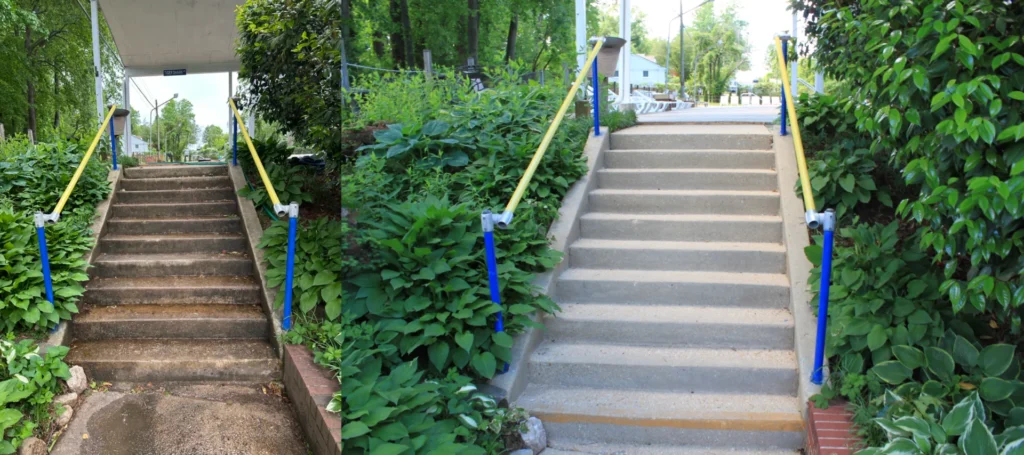
Hard, durable surfaces can handle the force and benefit from it. Driveways, sidewalks, concrete patios and many paver walkways come out evenly clean, especially when we use a rotating surface cleaner instead of a wand. The pressure is still matched to the surface, because even concrete can etch if the tip is too close.
When Soft Washing Makes More Sense
Anything that can crack, dent, soak up water or lose its finish should be soft washed. That includes:
- Vinyl siding: high pressure can force water behind the panels.
- Asphalt shingle roofs: pressure strips the protective granules.
- Painted wood and trim: pressure lifts paint.
- Stucco: it can crack or absorb water.
- Window frames and seals: pressure can break the seal.
Roof makers agree. The Asphalt Roofing Manufacturers Association warns against power washers on shingles and recommends a gentle cleaning solution instead.
Why Soft Washing Lasts Longer on Siding
Pressure removes what you can see. Soft washing kills the algae and mildew that you cannot, including the roots in the surface texture. That is why a pressure-washed house can turn green again within months, while a soft-washed one usually stays clean for a year or more.
If green siding is the problem, our post on why houses turn green every spring explains what causes it.
Why DIY Pressure Washing Goes Wrong
Rental pressure washers are powerful, and the mistakes are easy to make:
- Using a narrow tip on siding, which can crack vinyl or gouge wood.
- Spraying upward, which forces water behind siding and into walls.
- Holding the tip too close to concrete, which leaves stripes and etching.
- Skipping a cleaning solution, so the algae roots stay and the green comes back.
- Not protecting plants from the runoff.
None of these show up until after the job, which is why most of our calls about streaky or damaged siding come after a weekend rental.
Pressure Washing vs Soft Washing by Surface
| Surface | Method | How long it usually stays clean |
|---|---|---|
| Vinyl or aluminum siding | Soft wash | 12 to 24 months |
| Asphalt shingle roof | Soft wash | 2 to 5 years |
| Brick or stone walls | Soft wash or low pressure | 1 to 2 years |
| Concrete driveway or sidewalk | Pressure wash with a surface cleaner | 1 to 2 years |
| Pavers | Gentle pressure wash | 1 to 2 years |
| Wood deck or fence | Low pressure with a cleaner | 1 to 2 years |
What We Recommend for Most Fairfax Homes
Most homes need both. We soft wash the house and roof, then pressure wash the driveway, walkways and patio, so every surface gets the method it can handle. One visit, one setup, and nothing gets damaged.
Frequently Asked Questions
Is soft washing better than pressure washing?
Neither is better overall. Soft washing is better for siding, roofs and painted surfaces because it cleans without force. Pressure washing is better for concrete and stone. A professional crew uses each where it fits.
Can pressure washing damage my siding?
Yes. High pressure can crack or dent vinyl, force water behind the panels, strip paint and break window seals. That is why siding should be soft washed.
Why does algae come back after pressure washing?
Pressure removes the visible growth but often leaves the roots in the surface texture. A soft wash cleaning solution kills the algae, so the results last much longer.
Can a roof be pressure washed?
It should not be. Pressure strips the granules that protect asphalt shingles and can shorten the roof’s life. Roofs should be soft washed.
Which is better for a wood deck?
Usually a low-pressure clean with a cleaning solution. High pressure can raise the grain and splinter softwood, so wood is treated more like siding than concrete.
Pressure Washing and Soft Washing in Fairfax
The right method is the one that cleans the surface without hurting it. Tell us what you want cleaned and we will match each surface to the right approach.
We serve homeowners in Fairfax and nearby Burke and Centreville.
Get your free quote or call 571-364-4466. We answer calls and quote requests 24/7.
Keep reading: